Official NAATI Spanish <> English Translations - High quality - Fast Service - Competitive Prices
ATIS - Australian Translating and Interpreting Service
  • Home
  • About us
    • Our Directors >
      • Eric A. Torres-Mendieta - Founding Director & Chief Translator
      • Eric Manuel Torres - Managing Director (CEO)
    • Testimonials
  • Services
    • What is an Official NAATI Translation?
    • How the Translation Process Works
  • FAQs
  • Contact Us
    • ATIS Blog

ATIS Blog and News

Musings on the Translation and Interpreting industry from an Australian perspective

ATIS’ Founding Director and Chief Translator awarded NAATI Recertification (2024–2027)

28/6/2024

0 Comments

 
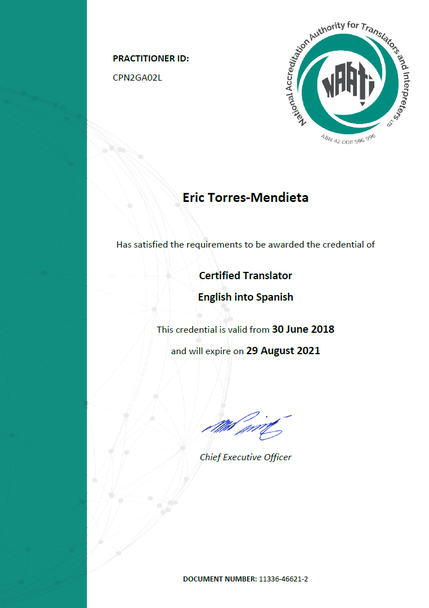
Our Founding Director and Chief Translator, Eric Arturo Torres-Mendieta, has obtained recertification from the National Accreditation Authority for Translators and Interpreters (NAATI) for a further three years (2024–2027). This recertification confirms his continued inclusion into the NAATI certification system which is designed to evaluate competency to practice Translating and Interpreting.

Mr. Eric Torres-Mendieta thus retains his Certification Practitioner/ID Number: CPN2GA02L. This corresponds to his NAATI Credential as a Certified Translator: English into Spanish.
Picture
Eric Arturo Torres-Mendieta's NAATI Certificate (2024)
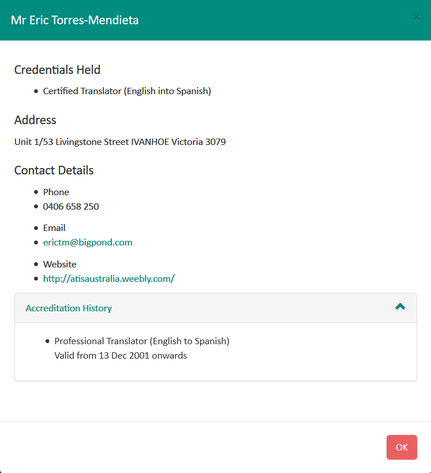
​This recertification complements his already-gained NAATI Accreditation as a Professional Translator (English to Spanish) which has been valid from December 2001 onwards. In other words, this recertification is in addition to his status as an Accredited Translator-for-life.
Picture
Eric Arturo Torres-Mendieta's listing on the NAATI Online Directory
0 Comments

ATIS’ Founding Director and Chief Translator awarded NAATI Recertification

12/6/2021

0 Comments

 
Our Founding Director and Chief Translator, Eric Arturo Torres-Mendieta, has obtained recertification from the National Accreditation Authority for Translators and Interpreters (NAATI). This recertification confirms his continued inclusion into the NAATI certification system which is designed to evaluate competency to practice Translating and Interpreting.

Mr. Eric Torres-Mendieta has thus retains his Certification Practitioner/ID Number: CPN2GA02L. This corresponds to his NAATI Credential as a Certified Translator English into Spanish.
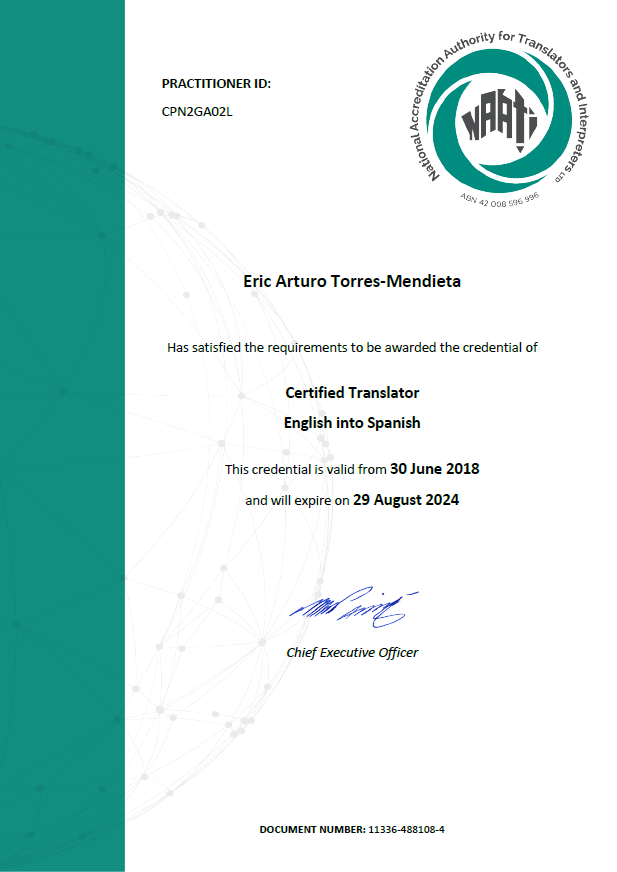
Picture
Eric Arturo Torres-Mendieta's NAATI Certificate
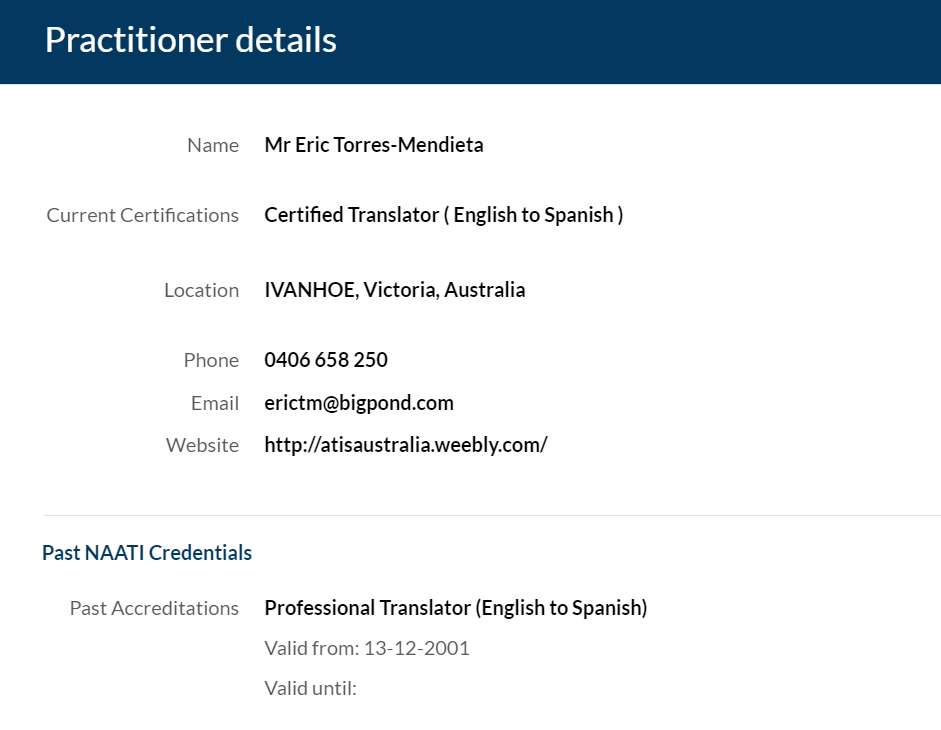
This recertification complements his already gained NAATI Accreditation as a Professional Translator (English to Spanish) which has been valid since December 2001 on-wards. In other words, this recertification is on top of his status of Accredited Translator-for-life.
Picture
Eric Arturo Torres-Mendieta's listing on the NAATI Online Directory

0 Comments

New Electronic Payment/Bank Transfer Details

20/3/2020

0 Comments

 
Picture
ATIS wishes to advice that our electronic payment/bank transfer details have changed. For clients who prefer this payment method, please take note of our updated electronic payment/bank transfer details when seeking translations quotes.
0 Comments

ATIS now on Google My Business 

22/10/2019

0 Comments

 
ATIS has officially set-up on Google My Business: g.page/ATISAustralia/
0 Comments

Our NAATI Translator Stamps: Accredited and Certified

20/7/2018

2 Comments

 
Picture
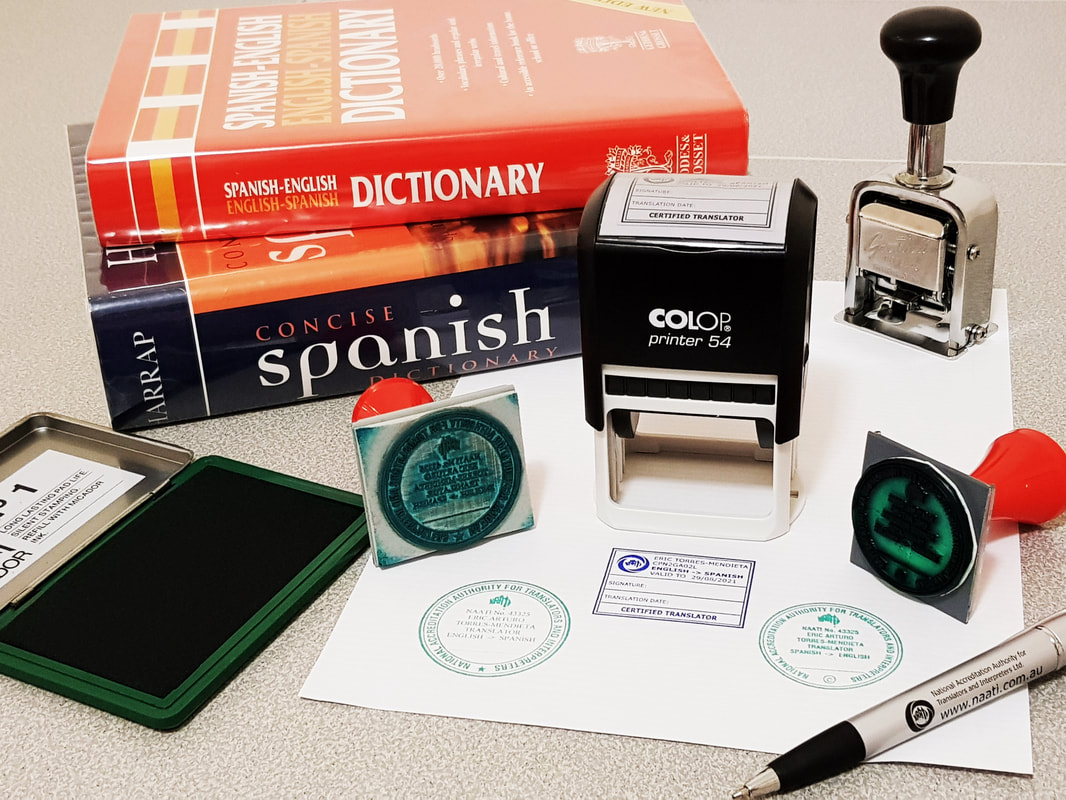
Showcasing our NAATI stamps [Image by Eric Manuel Torres]
Our office is proud to announce that we have both NAATI Accredited and NAATI Certified Translator Stamps. The NAATI Translator Stamps are used to certify translations.

As NAATI recognises both stamps as official, all our Official English <> Spanish Translations will bear both an NAATI Accredited Translator Stamp and a NAATI Certified Translator Stamp. For our clients this means their translations are double guaranteed.

While the NAATI Certified Translator Stamp displays an expiry date, this date only refers to the potential expiry date for the Certified Translator credential at the time the stamp was issued, and does not reflect an expiration date of the translated documents. Hence, although the NAATI certification has an expiry date and is subject to renewal every 3 years, the translations produced are valid permanently. For further information, please view the NAATI information sheet: https://www.naati.com.au/media/1871/naati-translator-stamp-infopdf.pdf 

On the other hand, the NAATI Accreditation is permanent -- that is, for life. To quote an email sent by NAATI: "Transitioning to NAATI certification does not mean you will lose your existing NAATI accreditation or recognition." [See PDF version of email on right.]

Our Accreditation number: 43325, and our Certification Practitioner/ID number: CPN2GA02L, can be verified at the NAATI website: https://www.naati.com.au/. Just click 'Recourses' in the navigation bar, and select either 'Verify a NAATI Accreditation' or 'Verify a NAATI Certification', respectively.
​

NAATI Translator Stamp Information Sheets and Email Confirming Permanency of NAATI Accreditation


NAATI Translator Stamp Info Sheet
File Size: 403 kb
File Type: pdf
Download File

NAATI Translator Stamp and Expiry Date Info Sheet
File Size: 174 kb
File Type: pdf
Download File

NAATI Email stating that translators will not lose existing NAATI accreditation
File Size: 459 kb
File Type: pdf
Download File

Picture
Close-up of our NAATI stamps [Image by Eric Manuel Torres]
2 Comments

ATIS’ Founding Director and Chief Translator awarded NAATI Certification

9/7/2018

1 Comment


Our Founding Director and Chief Translator, Eric Arturo Torres-Mendieta, has recently been awarded a certification from the National Accreditation Authority for Translators and Interpreters (NAATI). This certification confirms his inclusion into the new NAATI certification system which is designed to evaluate competency to practice Translating and Interpreting.

Mr. Eric Torres-Mendieta has thus been issued a new Certification Practitioner/ID Number: CPN2GA02L. This corresponds to his NAATI Credential as a Certified Translator English into Spanish.

Picture

His new NAATI Certificate

This new certification complements his already gained NAATI Accreditation as a Professional Translator (English to Spanish) which has been valid since December 2001 on-wards. In other words, the newly awarded certification is on top of his status of Translator-for-life.

Picture

His listing on the NAATI Online Directory
Congratulations to him!
1 Comment

The Ten Commandments as a Translation of the Language of the Universe

21/7/2016

2 Comments

 
I just wish to share this beautiful quote from Pope (now Pope Emeritus) Benedict XVI:
Picture
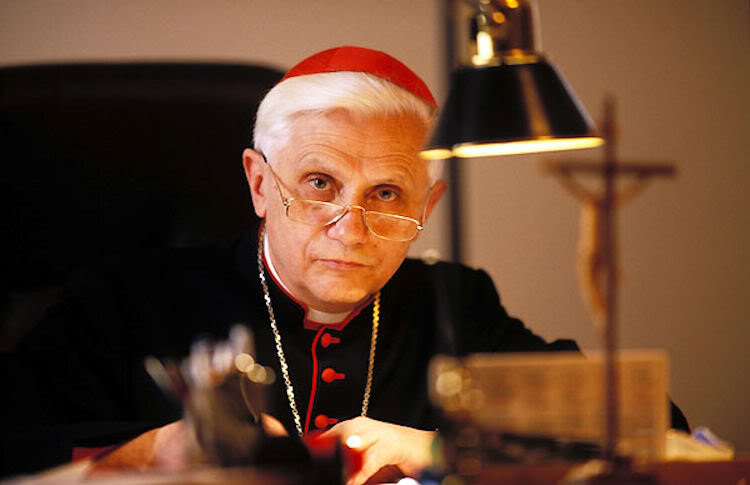
Cardinal Ratzinger - Image from: http://beforeitsnews.com/christian-news/2016/07/pope-benedict-xvi-lecture-by-h-e-cardinal-ratzinger-eucharist-communion-and-solidarity-2528505.html
The words "God said" appear ten times in the creation account. In this way the creation narrative anticipates the Ten Commandments. This makes us realize that these Ten Commandments are, as it were, an echo of the Creation; they are not arbitrary inventions for the purpose of erecting barriers to human freedom but signs pointing to the spirit, the language and meaning of creation; they are a translation of the language of the universe, a translation of God's logic, which constructed the universe.
~ Joseph Ratzinger, In the Beginning: A Catholic Understanding of the Story of Creation and the Fall (Eerdmans, 1995), p. 26. [Emphasis added.]
PictureSermon on the Mount by Carl Bloch [Public Domain]
Even thought translation is not the central theme of the quoted passage, as a translator, Pope Benedict XVI's words speak loudly of how highly he thinks and appreciates the profession of translation. For Pope Benedict XVI, the art of translations in not just a mere human activity of communication between human languages, but rather something blessed with the divine signature, for God, the Creator of heaven and earth, is also, as it were, a translator. God translates His mind and love in a way we humans many comprehend and respond to.

Furthermore, as everything Catholic is, by its very nature, Christocentric, then Christ in the Incarnation is the translation par-excellence. In Christ, the Word, we have the divine language of love in human language and in human flesh. Jesus said "He who has seen me has seen the Father; how can you say, ‘Show us the Father’?" (John 14:9). Here we have see what every translation ought to aspire to be: not only a honest reflection of the source document, but such a true (and in Christ's case, living) reflection of the source; to be consubstantial with the source. In other word, a translation should not merely be a means or a pale image of the original, but rather a translation should be so faithful to the source that it becomes, as it were, one and the same with the source. As Jesus, the Divine Translation, said, "I and the Father are one.” (John 10:30)

To me, as a translator, this gives a very high value to the art of translation; indeed, it exalt the work we translators (and interpreters) undertake for it is a collaboration in the work of God. We translators (and interpreters), swear an oath to be true and faithful to the source. In this we are echoing "Jesus Christ the faithful witness" (Revelation 1:5). Hence in undertaking this work of translation, we ought to not only convey meaning from one language to another, but also, more importantly, communicate God's love to our fellow human beings. Indeed, is it not this communication of God's love our duty in every work and action?

2 Comments

St. Jerome - Patron of Translators

2/10/2015

0 Comments

 
Picture
Saint Jerome Writing by Caravaggio [Public Domain]
Today we have a special post in commemoration of the Patron Saint of Translators: St. Jerome. It's only proper being September 30th, his feast day.

The Catholic Church has given us many heavenly intercessors. These patron saints pray to God unceasingly on our behalf. (Catholics praying to saints is often misunderstood, suffice to say here that praying to saints doesn't mean we can't pray to God directly, indeed we can and should, however just like you can get your friends to pray with and for you, saints are your heavenly friends whom also pray with and for you, the only difference is that they can do it non-stop with perfect love and dedication.)

A patron saint is chosen due to their particular connection with the subject of the prayer. Indeed, many, if not most occupations and professions have one (and sometimes more than one), and Translation is no exception. St. Jerome is our saint.

St. Jerome (b. 340-2 and d. 420) was born in Stridon, a town on the confines of Dalmatia and Pannonia (Croatia). With his passion for books and great thirst for knowledge he went of to study in Rome. Indeed, St. Augustine said of him, “What Jerome is ignorant of, no mortal has ever known.” It was also in Rome where he was baptized in approximately 360.

Unlike many saints which are remembered for their outstanding virtue or peaceful nature, St. Jerome is often remembered for his bad temper! This doesn't mean he was any less holy however. He was so passionately in love with Christ that he used his mighty pen to, lets say, instruct the ignorant. Indeed anyone who taught error was an enemy of God and truth, and St. Jerome went after him or her with his mighty and sometimes sarcastic pen.

He travelled, particularly in Palestine, and studied theology but eventually became ill at Antioch. He withdrew to the wild desert in Syria where he ever increased in holiness and wisdom. In 379 be was ordained. Three years later, in Rome, he became Secretary to Pope Damasus I. However when Pope Damasus I died in 384, St. Jerome's position in Rome became very difficult due to pressure from his enemies (many of them gain by his harsh criticism). St. Jerome was compelled to leave Rome and settled in Bethlehem in 386 where he lived a life of asceticism and study.

It was in Bethlehem where his great works were competed. St. Jerome is best remembered for his revision of Latin translations of the Gospels and Psalms and translation of the Old Testament into Latin from Hebrew and Greek. In simple terms, these translations collectively form the Vulgate. Furthermore, St. Jerome also wrote extensive biblical commentaries.

St. Jerome died on September 30th, 420.
Picture
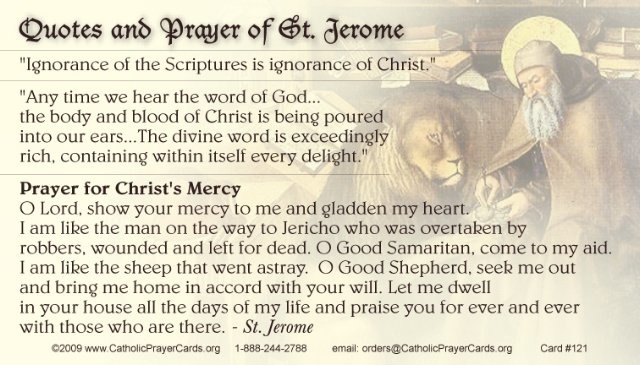
Image from: http://www.catholicprayercards.org/Holy_cards_of_Male_Saints/saint-jerome-prayer-card.html
0 Comments

Photo art of the ATIS website (Part IV)

26/9/2015

0 Comments

 
In this fourth instalment, we would like to highlight the image from our 'Services' page. The previous blog entries in this series can be found here: Part I, Part II and Part III.

ATIS Services Page Image

For any website offering services, it needless to say, that their Services page is of importance. Indeed, it is here where they show potencial clients their range of services how their services would help in achieving the client's goals. For ATIS, it's no different; our Services page highlights our range translations and language services.
Picture
ATIS Website 2015 Services Page Image - Photo by Eric Manuel Torres
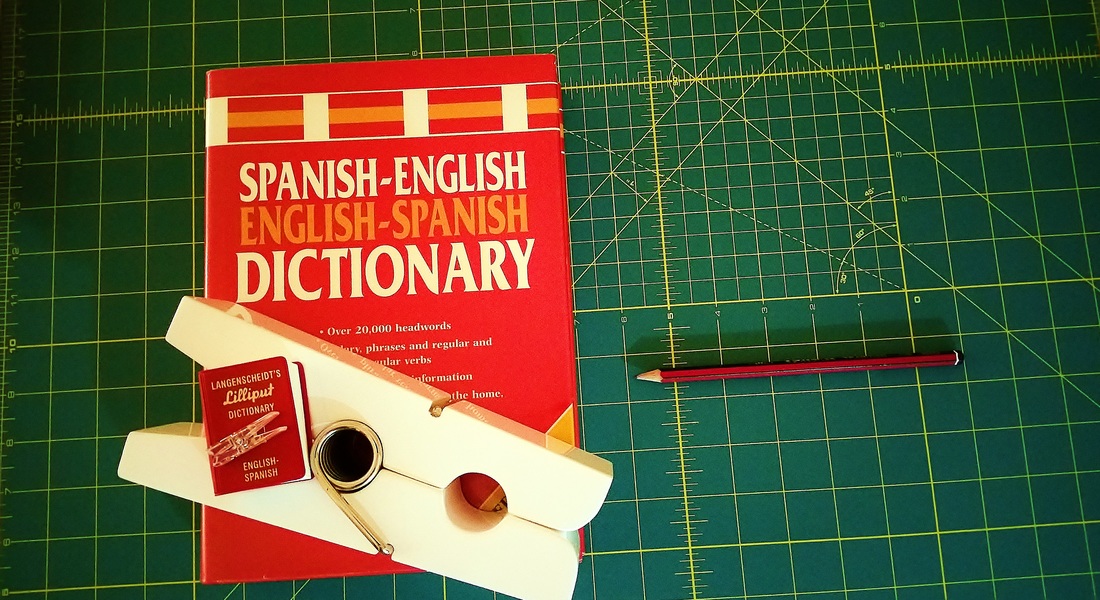
With this photograph, I wished to represent how ATIS can service all size of clients: from individuals to large organisations. Furthermore, ATIS can service wide range of project sizes: from small single paged documents to large and complex translations projects.

I wished this, no project or client too small or big ability of ATIS, to be displayed with the juxtaposition of the big and small bilingual (Spanish<>English) dictionaries, each with it's respectively sized peg.  

What do you think about this image?​
0 Comments

Photo art of the ATIS website (Part III)

19/9/2015

0 Comments

 
In this third instalment, we would like to highlight the image from our 'How the Translation Process works' page. The previous blog entries in this series can be found here: Part I and Part II.

Little Red Dictionary

For our 'How the Translation Process works' page, the image I wanted to display needed to show that we care for our clients. Furthermore, it had to depict what we do; that is, deliver high quality Spanish <> English Translations and Interpretation services.
Picture
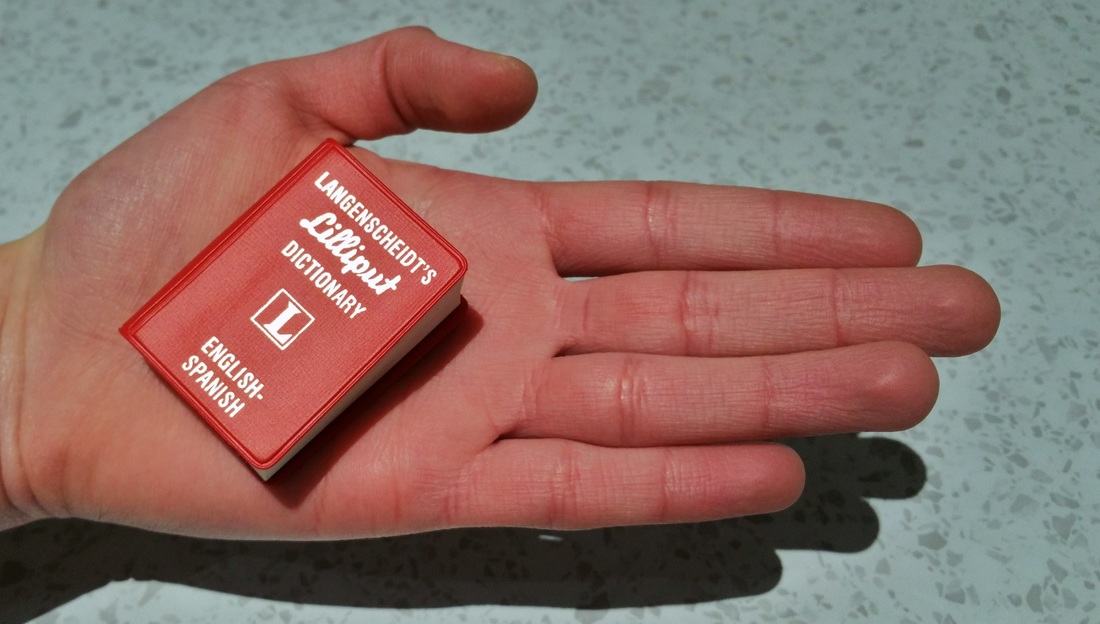
Little Red Dictionary - Original photography art by Eric Manuel Torres
I believe the photograph does capture the desired message. Would you agree?

The hand, perhaps like the human face but to a lessor extent, can express powerful messages, expressions and emotions. Indeed, the hand is not only a tool but also a most valuable part of non-verbal communication. A hand can tell you to proceed or stop, it can show love and care or anger and aggression.

This little red dictionary is a cute miniature. I knew it would indeed came in handy. Of course, dictionaries and other language recourses are essential to translators and interpreters; they are an important tool for us.

Below is the original colour photo:
Picture
Photo by Eric Manuel Torres
(For those wondering, the hand photographed is mine; and yes, I also took the photo with my other hand)
0 Comments
<<Previous

    Author

    Eric Manuel Torres, Executive Director (CEO) of ATIS shares thoughts on the Translation and Interpreting industry in Australia and also news about the family business.

    Click Below to visit Eric Manuel Torres LinkedIn profile:

    View my profile on LinkedIn
    Also to view our Founding Director and Chief Translator's (Eric Arturo Torres-Mendieta) LinkedIn profile, please click below:
    View my profile on LinkedIn

    Archives

    July 2018
    July 2016
    October 2015
    September 2015
    August 2015
    July 2015

    Categories

    All
    Art
    ATIS News
    Bilingualism
    Business
    Catholic
    Culture
    Education
    English
    Health Care
    History
    Interpreting
    Languages
    NAATI
    Photography
    Pope Benedict XVI
    Stamp
    St. Jerome
    Translation

    RSS Feed

Powered by Create your own unique website with customizable templates.